DESIGNER ROLE:
Researcher | AI/UX/UI Designer
TOOLS:
ChatGPT | Figma Make
PROBLEM DEFINITION:
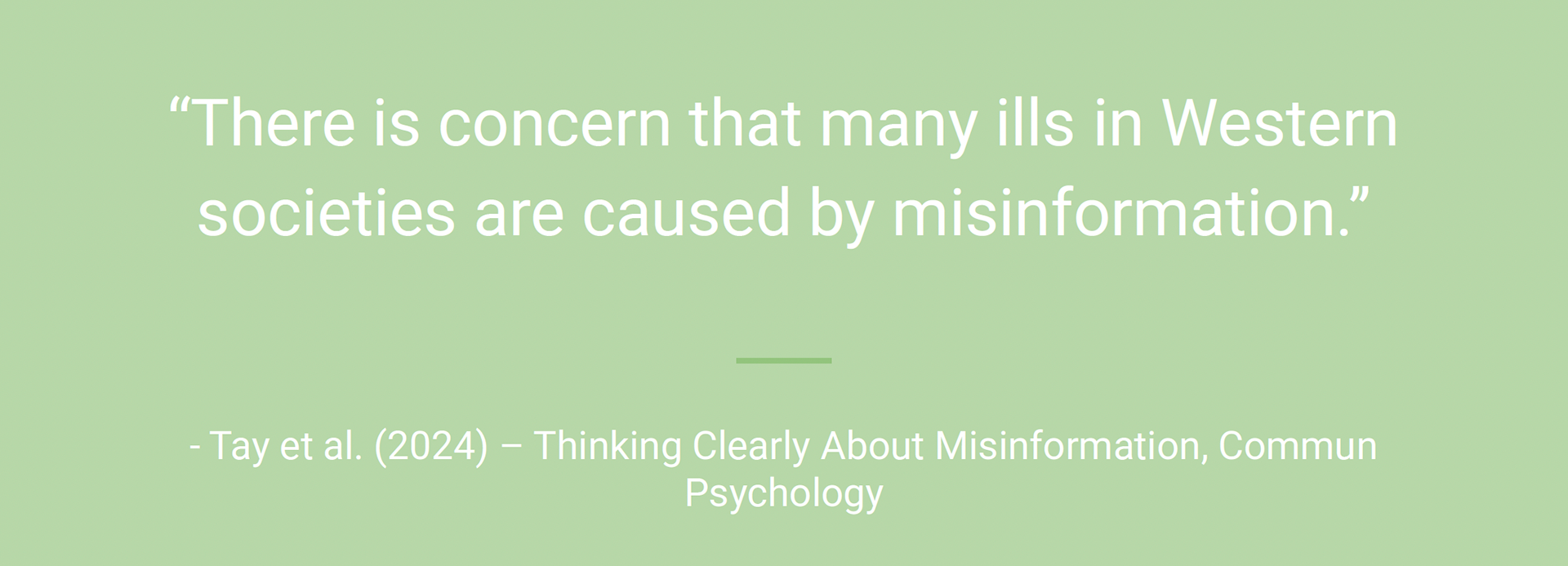
From false headlines and manipulated images to AI-generated content, the internet is flooded with information that looks real but isn't. This environment makes it harder for individuals to know what's rue, who to trust, and how to respond. The consequences are real: public health, democracy, science, and social trust are all being undermined by false or misleading content.
SOLUTION:
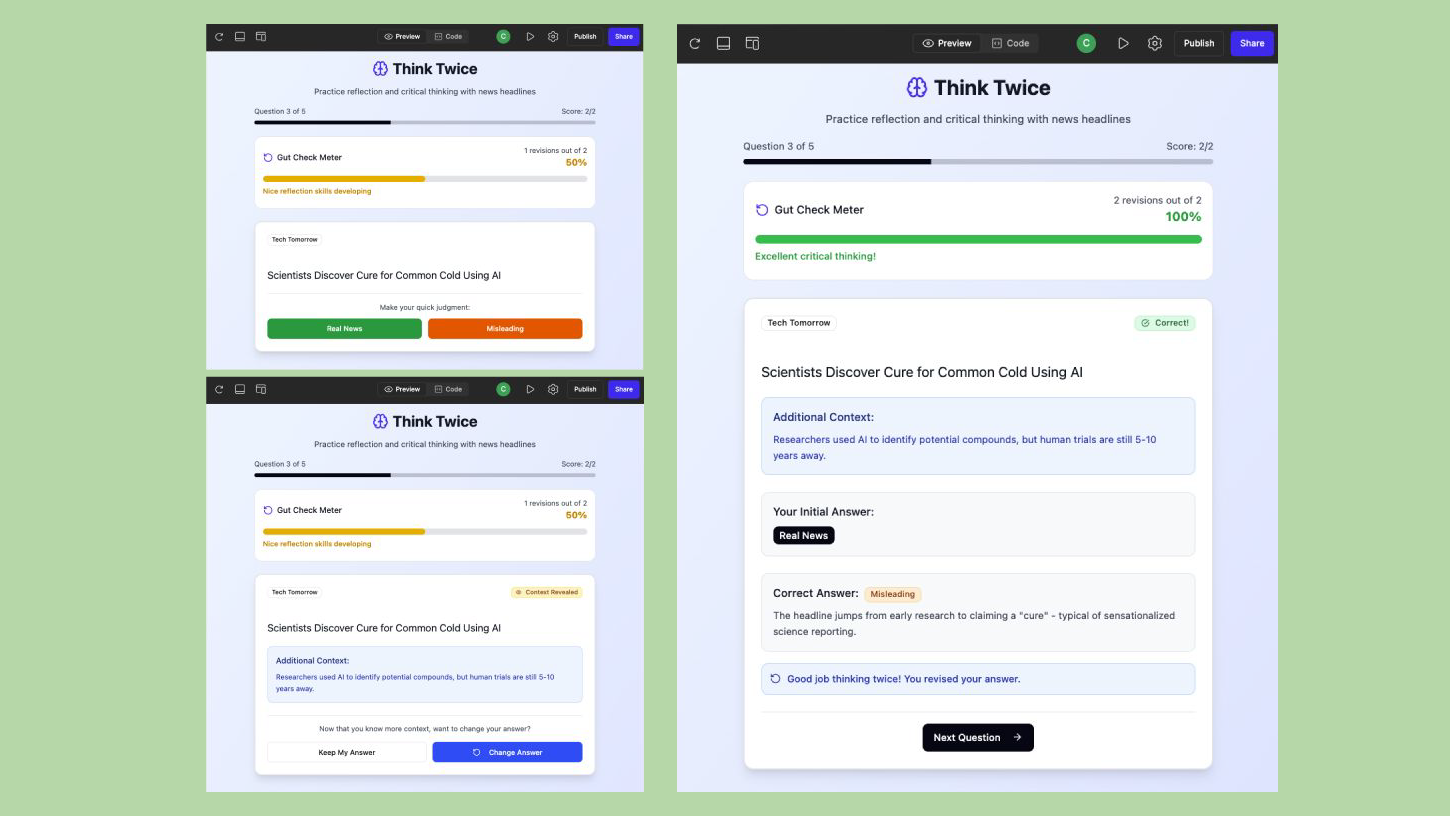
In a world increasingly saturated with misinformation, the ability to quickly and critically assess content is not a luxury - it's a fundamental skill. This app turns everyday headlines and viral posts into quick, fun challenges that train your brain to spot bias, bad logic, and sneaky misinformation - one level at a time.
By turning media literacy into a daily habit, the tool empowers its users to question, analyze, and think more clearly about the information they consume.
challenges:
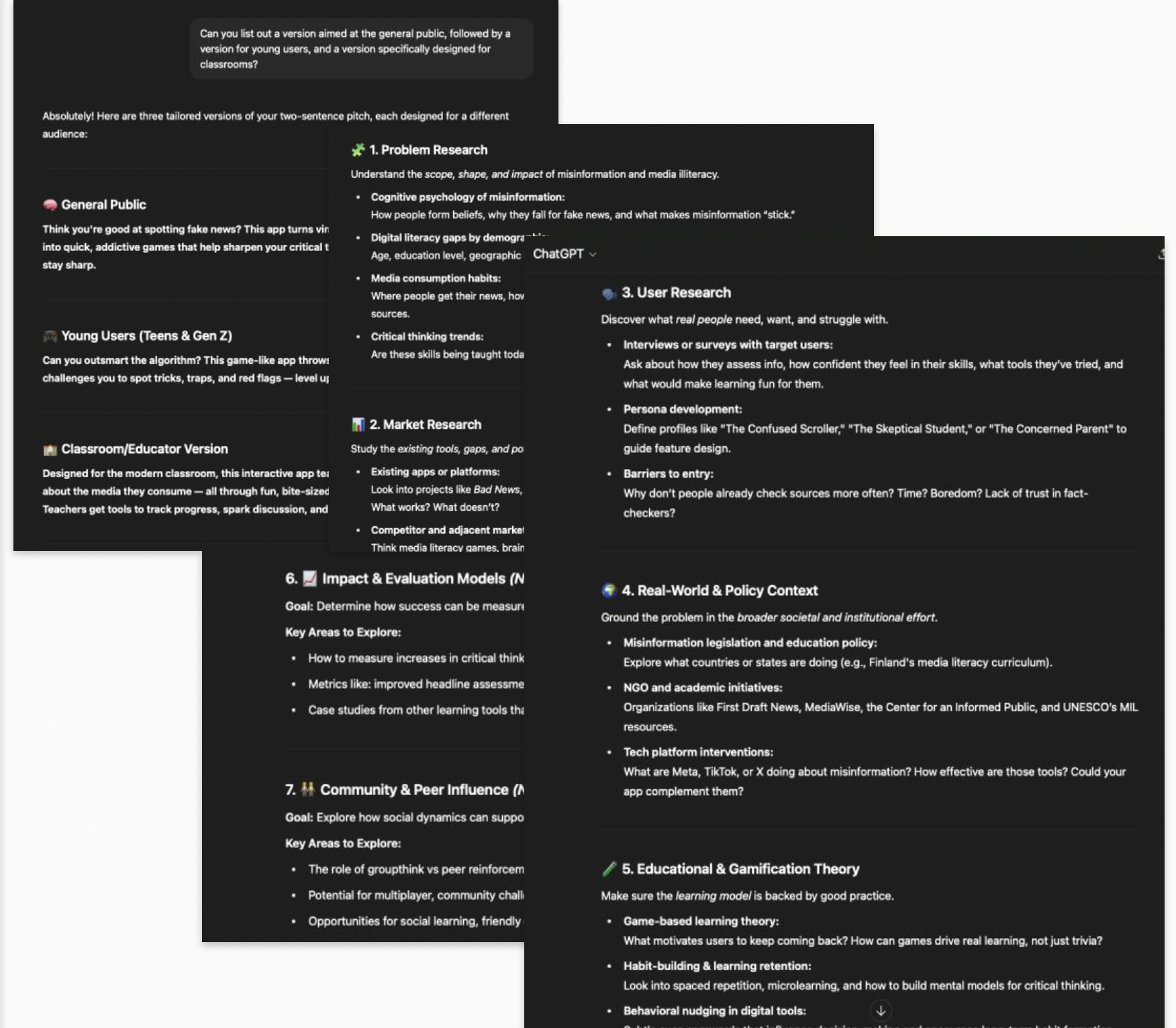
Option Overload
While interacting with AI, it was hard not get overwhelmed by the possibility of rabbit holes one could go down, especially when the AI's responses or suggestions where all interesting paths to consider.
Sometimes while the outputs can be helpful, they can also be a lot of information to parse through.
Ignoring Limits
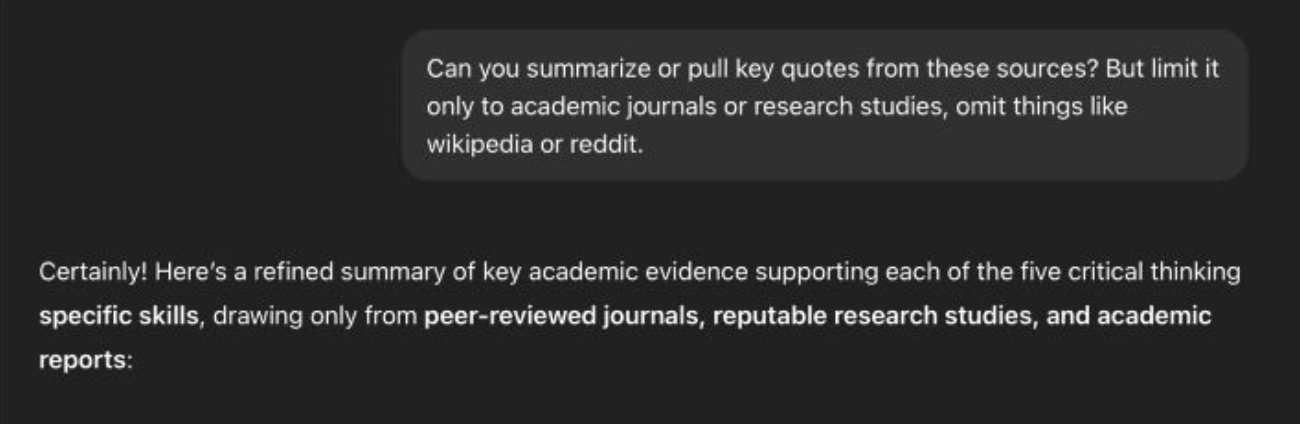
In some instances, when I asked ChatGPT to provide credible sources for the claims it made, I would specify limits.
For instance, it asked if I wanted help pulling quotes, and I said yes but to please limit the sources it pulled quotes from to only be academic sources or research studies, and to specifically omit things like Wikipedia and Reddit. It did not follow it precisely.
process:
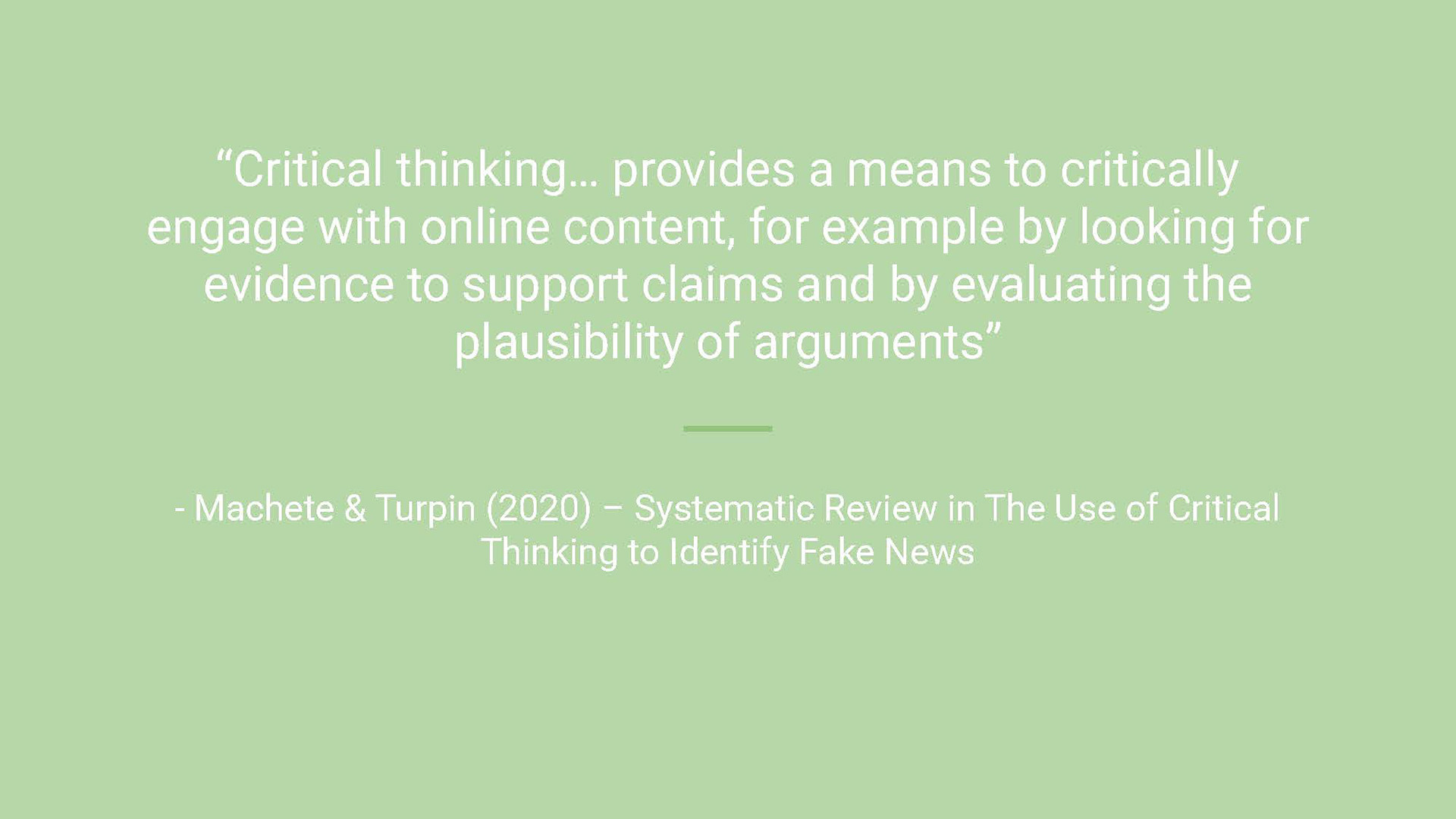
What is Critical Thinking
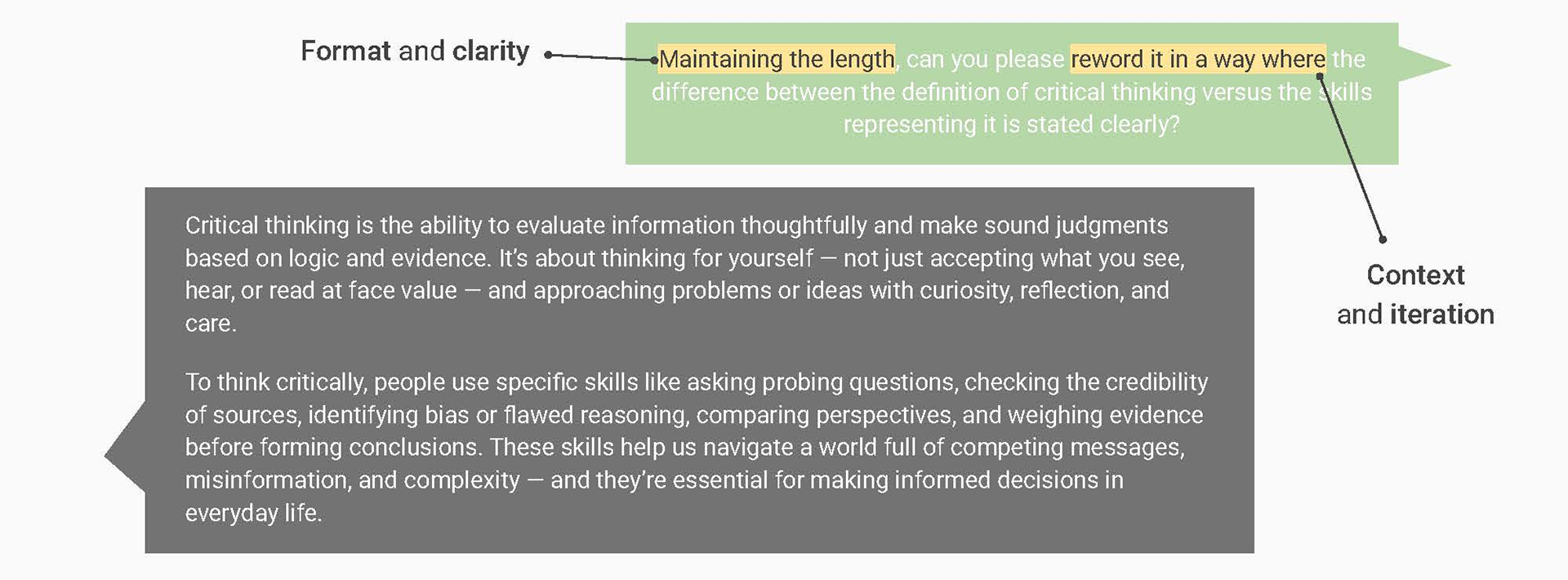
Throughout the interactions I used clarity and natural language to steer conversation in my desired direction. I also relied on specificity and format to increase control over the AI's output, saying things like "Let's step back momentarily" or "Can you give me a simplified response in no more than two paragraphs".
I was also able to identify an interesting split between how critical thinking is defined as a whole, versus the individual skills that comprise it, and thought this was a valuable difference to explore in terms of how this would inform the structure of the game(s).
the vision:
Mini Games based on Critical Thinking Skills.
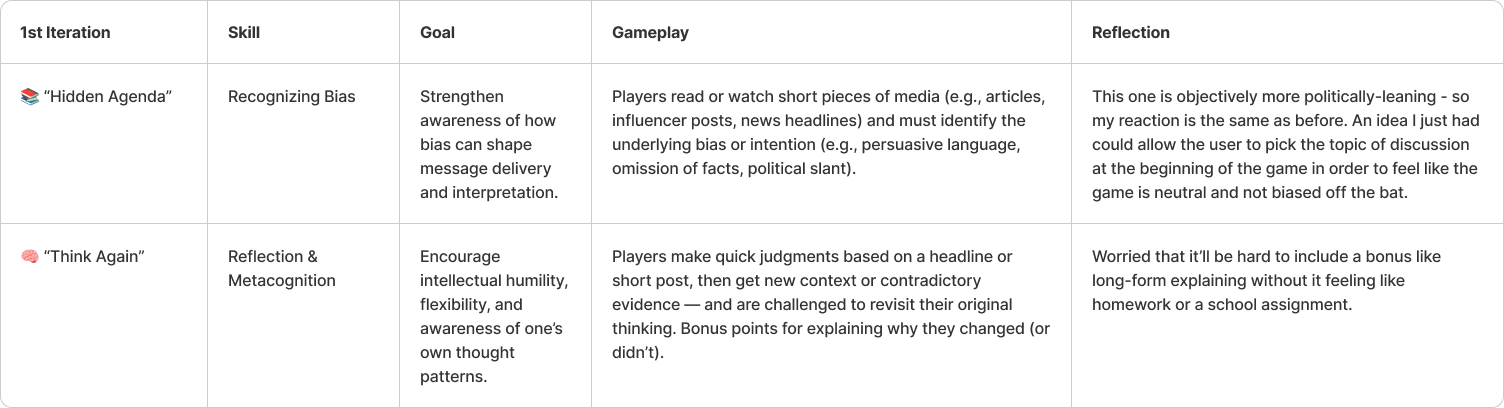
With the aid of AI, I was able to identify five main skills a user could work on reinforcing to improve their critical thinking abilities:
• Active Listening
• Source Evaluation
• Source Evaluation
• Recognizing Bias
• Logical Reasoning
• Reflection & Metacognition
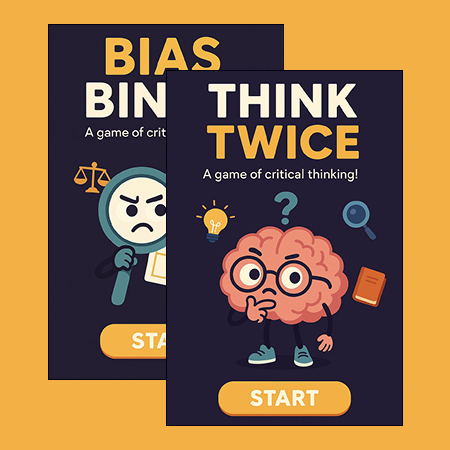
Out of the initial five, I first narrowed it down to two: Recognizing bias and reflection & metacognition. Ultimately though, I decided to focus specifically on reflection & metacognition to avoid overcomplicating the prototype output.